

When a live roulette wheel starts spinning, most players focus on the ball. During blackjack, attention usually stays on the cards. The person running the table can almost disappear into the background when everything works correctly.
That is actually a sign of skilled dealing. To understand What Makes a Professional Live Casino Dealer?, it helps to look behind the broadcast.
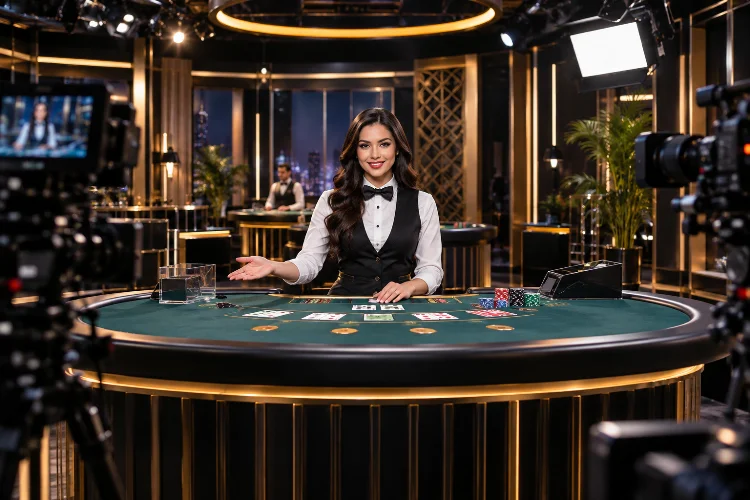
Today’s dealer works inside a carefully managed studio containing cameras, game-control systems, supervisors, and strict procedures.
The role blends casino knowledge with television-style presentation, customer service, and the ability to stay precise while working live.
A Live Dealer Is Also a Broadcast Presenter
A modern live casino dealer has two audiences: the gaming system and the people watching through their screens.
That changes the role considerably compared with the traditional image of a casino croupier.
Evolution describes its presenters as leading games live from a studio by opening rounds, accepting betting periods, dealing cards or spinning wheels, announcing winners, and interacting with players.
Current job descriptions go even further, comparing the position to a combination of dealer, live host, and customer-service professional.
The dealer therefore needs enough personality to make the broadcast engaging while remaining focused on procedures.
It is entertainment, but structured entertainment.
Training Turns Simple Movements Into Procedures
Dealing a card looks easy until every movement has to be completed exactly the same way under a camera.
Professional dealers train their physical movements, verbal announcements, game rules, and response procedures before appearing live.
Evolution currently states that new US casino dealers receive hands-on training covering games such as blackjack, roulette, baccarat, and on-camera presentation.
Formal training is also part of regulatory expectations in some jurisdictions.
The UK Gambling Commission’s live studio standards state that croupiers need adequate training to provide gambling fairly according to documented procedures and game rules. Refresher training should also be documented.
This is why an experienced dealer’s movements can look almost effortless.
What appears casual has usually been practised repeatedly.
Dealers Need to Understand the Rhythm of Each Game
Every table game has its own rhythm.
Roulette contains a betting period, wheel spin, betting closure, result, and payout stage. Blackjack moves through initial cards, player decisions, dealer actions, and settlement. Baccarat follows another sequence.
Professional dealers learn to make these stages feel continuous.
If the presenter moves too slowly, the game becomes dull. If they rush, players can feel confused or procedures can become sloppy.
Evolution specifically looks for presenters who can keep gameplay smooth while following on-screen prompts and studio procedures accurately.
Pacing is therefore partly technical and partly social.
A strong dealer develops a natural tempo that gives players enough time to understand what is happening without filling every second with unnecessary conversation.
Good Presentation Is More Than Smiling at the Camera
Camera confidence is easy to underestimate.
A dealer may spend much of a shift under studio lighting while being broadcast continuously to players they cannot physically see.
They need clear speech, comfortable posture, controlled hand movements, and a professional expression even during repetitive rounds.
Evolution’s recruitment material highlights confidence, personality, professional presentation, and the ability to entertain as important parts of the game presenter role.
The challenge is avoiding both extremes.
A dealer who looks uninterested can make a game feel lifeless. A presenter who performs too aggressively can distract from the game itself.
Professional presence sits in the middle: relaxed, attentive, friendly, and beleivable.
Fairness Depends on More Than the Dealer
The dealer is highly visible, but live casino integrity is built around an entire operating system.
The UK Gambling Commission requires applicable live dealer operations to be fair and independently auditable. Its guidance covers commercial-quality equipment, trained croupiers, supervision, surveillance, controlled access, and game records.
That means dealers work inside a monitored environment.
Their activities may be recorded so that procedures can be reviewed if a dispute or irregularity occurs. Supervisors can also oversee dealer behaviour and equipment integrity.
This should change how players think about professionalism.
A trustworthy live table does not depend entirely on whether the dealer appears friendly. It depends on the combination of trained staff, documented procedures, supervision, equipment controls, and regulatory requirements.
The presenter is one part of that chain.
Handling Mistakes Professionally Is a Critical Skill
Live games involve physical objects and human actions, which means unusual situations can happen.
A card might be mishandled, a dealer may need clarification, or a piece of equipment could require attention.
Professionalism becomes especially visible at that moment.
An inexperienced person may panic or try to hide the mistake. A trained dealer follows procedure.
Because live operations are supervised and recorded, the goal is not to pretend errors never happen. The goal is to resolve irregularities transparently and according to established rules.
This also requires emotional control.
The dealer may know that hundreds or thousands of people are watching. Staying calm while waiting for a supervisor or correcting a procedure is an important part of the role.
A smooth game matters, but integrity matters more.
Player Interaction Should Feel Natural, Not Pushy
One advantage of live casino over automated games is the presence of a real person.
Players can often communicate through chat, and the dealer may greet them, respond to comments, or briefly explain what is happening.
Evolution describes game presenters as creating a welcoming experience by chatting with players while explaining rules and maintaining gameplay.
However, good interaction has boundaries.
A professional dealer should not make a player feel pressured to increase stakes or continue gambling.
In Great Britain, responsible product standards specifically prohibit gambling products from actively encouraging customers to chase losses, increase stakes, or continue after they have indicated a wish to stop.
That broader principle fits professional presentation well.
Good service means making the game clear and welcoming—not trying to manipulate someone’s betting behaviour.
Concentration Becomes Harder Because the Job Is Repetitive
A dealer may perform the same basic action hundreds of times.
That repetition creates one of the less obvious challenges of the job: staying mentally engaged.
The 200th blackjack hand needs the same procedural care as the first. The same is true for announcing roulette results or managing betting windows late in a shift.
Evolution specifically describes attention to detail and professionalism as core requirements for studio presenters.
This is where consistent performers stand out.
A momentary lapse in concentration can cause an incorrect announcement, procedural mistake, or unnecessary delay.
Maintaining focus is therefore not just a personal work habit. It contributes directly to game quality.
Technology Works With the Dealer, Not Instead of Them
Live casino studios combine physical dealing with digital infrastructure.
Professional cameras stream the table. Software manages betting interfaces. On-screen prompts can guide parts of the workflow, while players participate remotely from different devices.
Evolution describes its live casino products as combining purpose-built studios, professional hosts, advanced streaming technology, and continuously operating digital games.
Pragmatic Play similarly describes its live casino setup as using trained professional dealers alongside dedicated studios, advanced broadcasting systems, 4K cameras, and multilingual interfaces.
Technology does not make the presenter less important.
Instead, it changes which skills matter.
The dealer needs to coordinate physical actions with digital timing while remaining natural on camera. That mixture of casino technique and broadcasting is what makes live casino dealing a specialised profession rather than simply a traditional dealer job moved online.
A Professional Dealer Makes the Process Feel Invisible
One of the strongest signs of quality is that players barely notice the complexity behind a round.
The betting period opens. The dealer performs the required action. Results are clear. The next round begins without confusion.
That smoothness depends on dozens of small skills working together.
Game knowledge prevents procedural errors. Presentation skills maintain engagement. Concentration protects accuracy. Communication keeps players informed. Studio procedures provide accountability.
When all of those elements are present, the dealer does not need to dominate the experience.
They simply make the game easy to follow.
That may be the clearest definition of professional live dealing.
Understanding What Makes a Professional Live Casino Dealer? means looking beyond a friendly voice or polished appearance.
The strongest dealers combine training, procedural accuracy, camera presence, communication, concentration, and respect for game integrity.
When watching a live game, notice how smoothly the presenter manages both people and procedure. The best dealers make a technically complex broadcast feel simple, natural, and consistant from round to round.
